Japchae Korean Glass Noodle Stir Fry – Easy Recipe
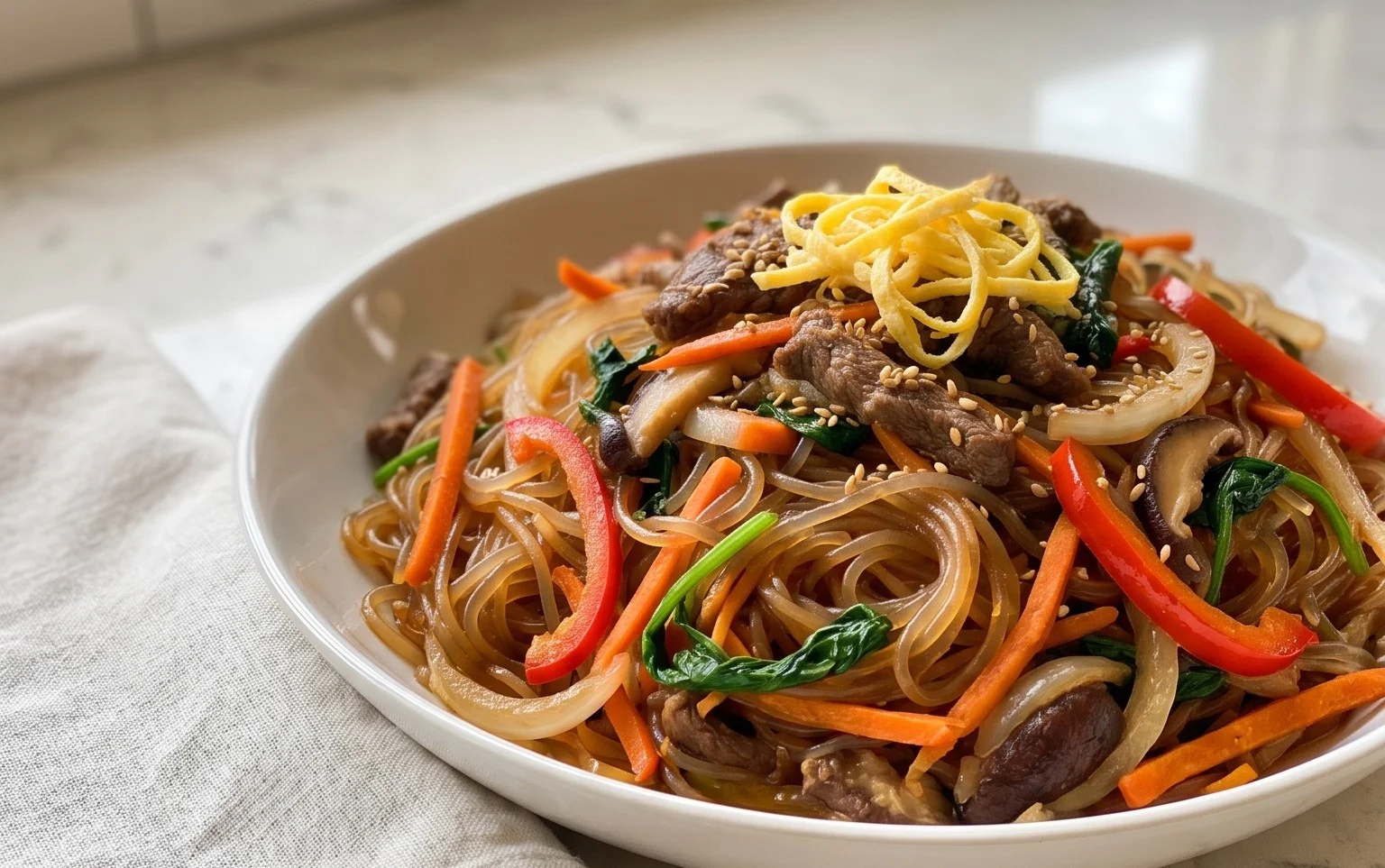
Japchae, the beloved Korean glass noodle stir fry, is a dish that truly sings with vibrant colors, textures, and flavors. Have you ever craved a meal that’s both incredibly satisfying and visually stunning? That’s precisely what Japchae delivers. It’s a cornerstone of Korean celebrations and everyday meals alike, and for good reason. The magic of Japchae lies in its harmonious blend of chewy, translucent sweet potato noodles, tender vegetables like spinach, carrots, and mushrooms, and savory strips of marinated beef or tofu. What truly sets this dish apart is the delightful contrast between the slippery noodles and the crisp-tender vegetables, all brought together by a perfectly balanced sauce of soy sauce, sesame oil, and a hint of sweetness. Making Japchae at home might seem intimidating, but I promise you, it’s a rewarding culinary adventure that will have your taste buds dancing!
Japchae (Korean Glass Noodle Stir Fry)
Japchae is a beloved Korean dish that’s as beautiful to look at as it is delicious to eat. It’s a symphony of textures and flavors, featuring chewy glass noodles stir-fried with colorful vegetables and tender strips of beef. Traditionally served during holidays and special occasions, Japchae is also a fantastic and satisfying meal for any day of the week. The preparation involves several components, but once you get the hang of it, it’s a delightful culinary dance. Let’s dive into creating this Korean classic.
Ingredients:
Cooking Instructions:
The beauty of Japchae lies in its vibrant colors and distinct textures. To achieve this, we’ll prepare each component separately before bringin extractg them all together. This might seem like a lot of steps, but each one is quite simple and contributes to the overall deliciousness of the final dish.
1. Preparing the Noodles and Beef:
First, let’s get the star of the show, the sweet potato glass noodles, ready. Bring a large pot of water to a boil. Add the glass noodles and cook them according to package directions, usually about 6-8 minutes, until they are translucent and tender yet still have a pleasant chegrape juicess. Be careful not to overcook them, or they will become mushy. Once cooked, drain them thoroughly and rinse them under cold water to stop the cooking process and prevent them from sticking together. You can then toss them with a tablespoon of the toasted sesame oil to keep them separated and add a subtle nutty flavor.
While the noodles are cooking, let’s attend to the beef. If you haven’t already, cut your chosen beef into thin strips against the grain for maximum tenderness. In a bowl, marinate the beef strips with a pinch of salt, black pepper, and about 1 tablespoon of soy sauce. Let this sit for at least 10-15 minutes while you prepare the vegetables.
2. Sautéing the Vegetables:
Now, for the colorful additions! Heat a tablespoon of oil in a large skillet or wok over medium-high heat. Add the thinly sliced yellow onion and stir-fry for about 2-3 minutes until it starts to soften and turn translucent. Next, add the julienned carrot and sliced mushrooms. Continue to stir-fry for another 3-4 minutes until the carrots are tender-crisp and the mushrooms have released their moisture and are slightly browned. Season lightly with salt and pepper. Once cooked, remove these vegetables from the skillet and set them aside in a bowl.
3. Cooking the Beef and Egg:
In the same skillet, add a little more oil if needed. Add the marinated beef strips in a single layer. Cook the beef, stirring occasionally, until it’s browned and cooked through, which should take about 4-5 minutes. Avoid overcrowding the pan; cook in batches if necessary to ensure the beef sears rather than steams. Once the beef is cooked, remove it from the skillet and set it aside with the vegetables.
Now, let’s make the egg garnish. In a small bowl, whisk the two large eggs until well combined. Add a pinch of salt and pepper. Heat a lightly oiled non-stick skillet over medium heat. Pour in the beaten eggs and cook them like a thin crepe, flipping once, until fully cooked. Let it cool slightly, then thinly slice the egg crepe into thin strips. These egg strips will add a delicate texture and a beautiful golden color to the Japchae.
4. Blanching the Spinach and Assembling the Stir Fry:
We’re getting close to the final assembly! Briefly blanch the baby spinach. You can do this by adding it to the pot of boiling water you used for the noodles (after draining them, of course) for about 30 seconds, or until it just wilts. Immediately drain the spinach and rinse it under cold water to preserve its vibrant green color. Squeeze out any excess water thoroughly. You can season the blanched spinach with a tiny bit of salt and a drizzle of sesame oil.
Now, it’s time to bring everything together. In a large bowl, combine the cooked glass noodles, sautéed vegetables, cooked beef, and blanched spinach.
5. Creating the Japchae Sauce and Final Toss:
In a small bowl, whisk together the soy sauce, honey, brown sugar, and the remaining toasted sesame oil. This is your flavor base for the Japchae. Pour this delicious sauce over the combined ingredients in the large bowl. Add the cut green onions. Gently toss everything together until all the ingredients are evenly coated with the sauce and well distributed. Be gentle to avoid breaking the noodles.
Taste the Japchae and adjust seasoning if necessary, adding more soy sauce for saltiness or a touch more honey or brown sugar for sweetness. If you like, garnish with toasted sesame seeds for an extra nutty crunch and visual appeal. Serve the Japchae warm as a main dish or as a delightful side. Enjoy the fruits of your labor – a truly authentic and satisfying Korean meal!
Conclusion:
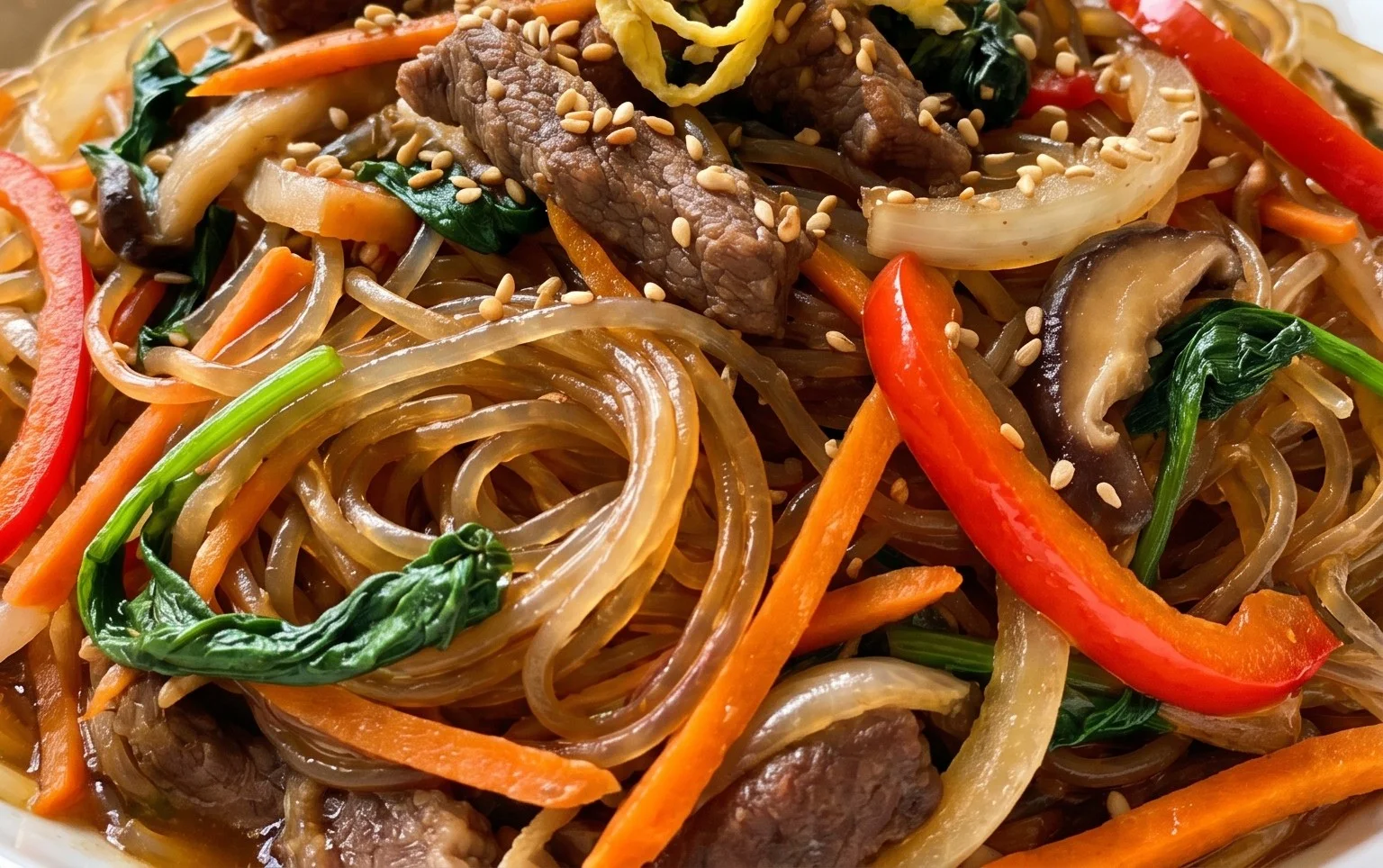
And there you have it – your guide to creating delicious and authentic Japchae! This Korean glass noodle stir fry is a true culinary gem, offering a wonderful balance of savory, slightly sweet, and umami flavors, all brought together by the wonderfully chewy texture of the glass noodles. It’s a versatile dish that can be enjoyed as a hearty main course or a delightful side dish, perfect for family dinners, potlucks, or even a special occasion. The vibrant colors from the assortment of vegetables make it as beautiful to look at as it is to eat, and the ability to customize it to your liking truly makes this Japchae recipe a winner.
For serving, consider pairing your Japchae with a side of kimchi or other Korean banchan. It also makes a fantastic accompaniment to grilled meats like bulgogi. Don’t be afraid to get creative with your variations! You can add proteins like thinly sliced beef, chicken, or shrimp, or even tofu for a vegetarian option. Feel free to experiment with different vegetables like broccoli, snow peas, or baby corn. The possibilities are endless, and the process is incredibly rewarding. I truly encourage you to give this Japchae recipe a try; I’m confident you’ll fall in love with its unique charm and flavor!
Frequently Asked Questions about Japchae:
What are Korean glass noodles made of?
Korean glass noodles, also known as dangmyeon, are typically made from sweet potato starch. This is what gives them their signature translucent appearance and delightfully chewy texture when cooked.
Can I make Japchae ahead of time?
Yes, you can! Japchae is a great make-ahead dish. Once fully cooked and cooled, store it in an airtight container in the refrigerator. To reheat, gently warm it in a pan or microwave, adding a splash of water or broth if it seems dry. Keep in mind that the noodles might become slightly softer upon reheating, but it will still be delicious!
What if I don’t have spinach?
If you don’t have spinach, other leafy greens like bok choy, baby bok choy, or even knon-alcoholic ale can be used as a substitute. Simply blanch them and chop them finely before adding them to the stir fry, similar to how you would with spinach.
Japchae (Korean Glass Noodle Stir Fry)
A popular Korean dish featuring chewy glass noodles stir-fried with colorful vegetables and thinly sliced beef.
Ingredients
-
12 ounces sweet potato glass noodles
-
16 ounces beef (cut into strips, e.g., flank, skirt, ribeye)
-
2 large eggs, beaten
-
1 large carrot, peeled and julienned
-
1 medium yellow onion, thinly sliced
-
3 mushrooms, thinly sliced
-
2 cups baby spinach, packed
-
2 stalks green onion, cut into 1 inch pieces
-
Oil, for cooking
-
Toasted sesame seeds (optional for garnish)
-
Salt and black pepper, as needed
-
7 tablespoons soy sauce (light sodium)
-
3 tablespoons honey
-
2 tablespoons brown sugar
-
2 tablespoons toasted sesame oil
Instructions
-
Step 1
Cook sweet potato glass noodles according to package directions. Drain, rinse with cold water, and cut into manageable lengths. Set aside. -
Step 2
Season beef strips with salt, pepper, and 1 tablespoon of soy sauce. Stir-fry beef in a lightly oiled pan until cooked through. Remove from pan and set aside. -
Step 3
In the same pan, stir-fry thinly sliced onion and julienned carrot until slightly softened. Add sliced mushrooms and cook for another 2-3 minutes. Remove vegetables from pan. -
Step 4
Make thin egg crepes by pouring beaten eggs into a lightly oiled, non-stick pan and cooking until set. Let cool, then julienne. -
Step 5
In a large bowl, combine cooked noodles, stir-fried beef, cooked vegetables, and julienned egg. Add remaining soy sauce, honey, brown sugar, and toasted sesame oil. Mix gently to combine. -
Step 6
Stir-fry the mixture in a large pan or wok for 3-5 minutes until heated through and well combined. Add baby spinach and green onions in the last minute of cooking, stirring until spinach is wilted. -
Step 7
Taste and adjust seasoning with salt and pepper if needed. Garnish with toasted sesame seeds before serving.
Important Information
Nutrition Facts (Per Serving)
It is important to consider this information as approximate and not to use it as definitive health advice.
Allergy Information
Please check ingredients for potential allergens and consult a health professional if in doubt.